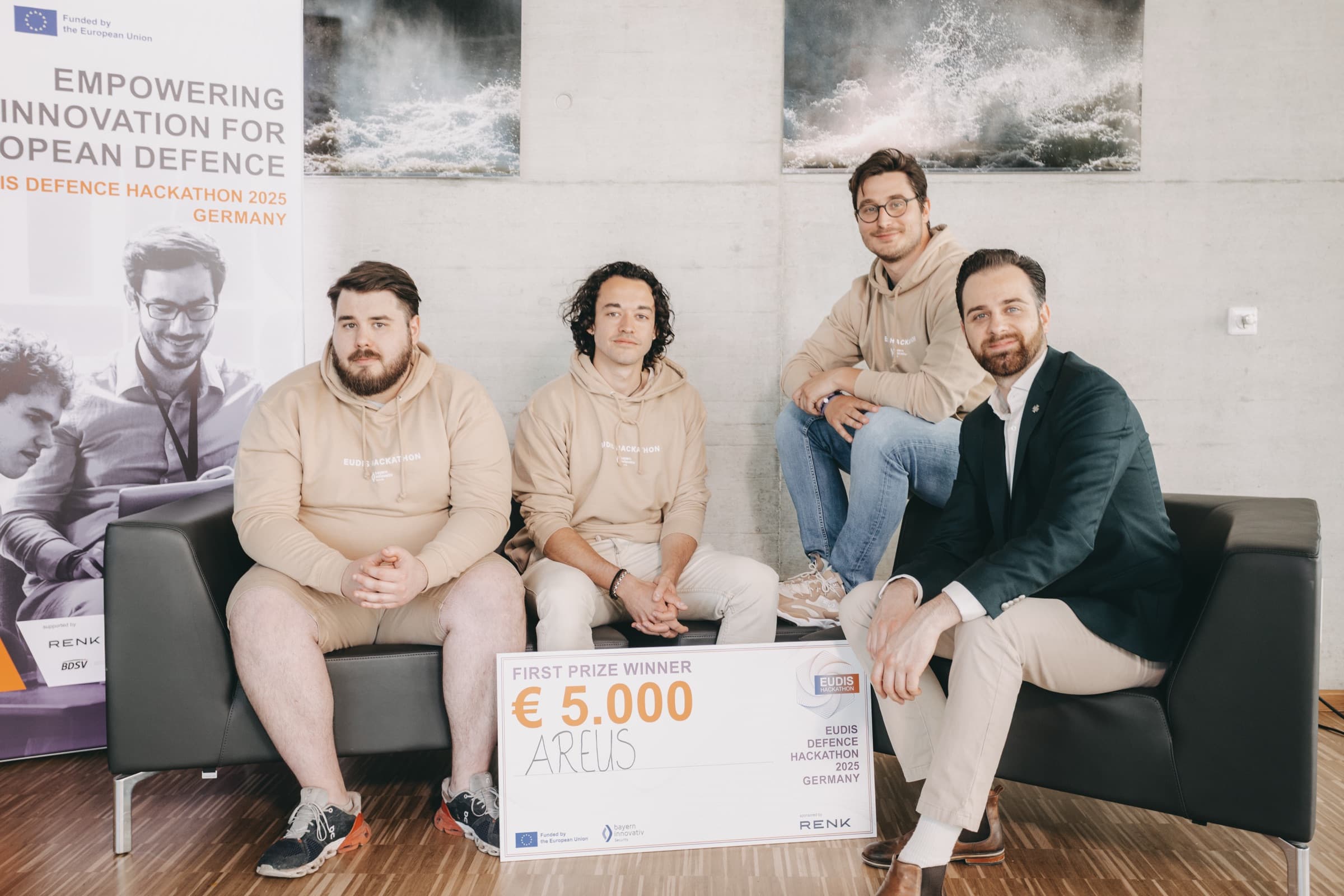
The second edition of the EU Defence Innovation Scheme (EUDIS) Hackathon asked teams across Europe to build rapid defence solutions for the Ukrainian battlefield. What set this edition apart was that the organizers made actual Ukrainian reconnaissance data available to competing teams. The challenge wasn't theoretical.
We spent 48 hours at Bayern Innovativ in Augsburg focused on the Enhanced Situational Awareness challenge — turning raw drone data into actionable spatial intelligence for operational teams. Working with real battlefield data forced us to deal with exactly the kind of messy, incomplete inputs that clean datasets never prepare you for.
We won at the Germany location and earned a spot in the EUDIS mentorship programme — two months of work with defence industry experts that sharpened how we think about bringing our technology to market. That trajectory carried us to the EU-wide pitching finals in July, where we placed third overall across all national winners.
What it confirmed
The hackathon validated that our approach to spatial intelligence resonates with the people who actually define Europe's defence capability needs. Competing on real data, under time pressure, against strong teams from across the EU gave us confidence that we're solving the right problem, the right way.
Aereus won the EUDIS Defence Hackathon at the Germany location and placed third in the EU-wide finals, organised under the European Defence Innovation Scheme.